
The DO OK IoT Hall of Fame: 10 Connected Devices That Changed Everything
10 connected devices that changed everything
Before your smart thermostat knew your morning routine, before Alexa became a household name, and long before anyone used the phrase “connected home” without even a hint of irony, a group of students in Pittsburgh decided they were tired of walking across campus for a warm Coke. What followed was the beginning of the Internet of Things.
IoT now connects over 18 billion devices worldwide, everything from industrial sensors monitoring offshore wind farms to the egg tray in your fridge that sends you a notification when you’re running low. But not all of these innovations were created equal. Some changed the world. Some changed an industry. And some provide us with useful reminders that just because you can connect a device to the internet, it doesn’t mean you should.
Here are ten IoT examples that earned their place in the DO OK IoT Hall of Fame: brilliant, bizarre, and everything in between.
#1. The Carnegie Mellon Coke Machine (1982)
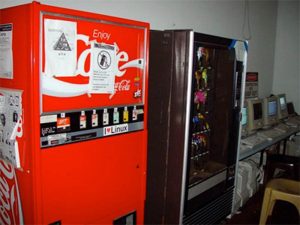
Where it all began
Four computer science students at Carnegie Mellon University solved a problem we could all relate to: how to avoid walking to the vending machine only to find it empty or stocked with warm drinks.
They installed micro-switches inside the department’s Coca-Cola machine and connected them to ARPANET, a network serving fewer than 300 computers at the time. The system tracked how many bottles remained in each column and how long they’d been there, labelling anything refrigerated for over three hours as “cold.” Anyone on the network could check before making the trip.
#2. The Romkey Toaster (1990)
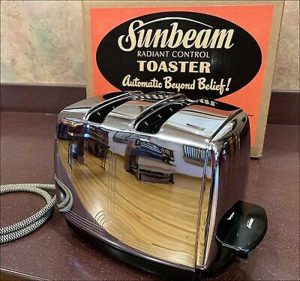
The internet’s first “thing”
At the 1989 Interop networking conference, organiser Dan Lynch challenged internet pioneer John Romkey to put a device online by next year’s show. Romkey chose a toaster connected to a computer via TCP/IP.
At Interop 1990, crowds watched as it was switched on and off over the internet. The practical application was non-existent. The trade union operating the venue was furious, because technically Romkey was preparing food without a permit, even though nobody was eating it. By 1991, he’d added a robotic crane arm to insert the bread automatically.
#3. The Trojan Room Coffee Pot (1993)
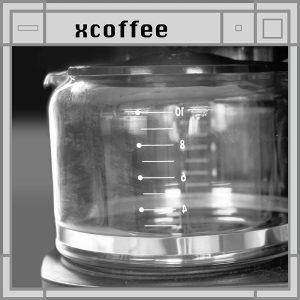
The world’s first webcam was for getting coffee
Cambridge University researchers faced another familiar office problem: you walk to the coffee machine, and it’s empty. Their solution was to point a camera at the pot and stream the image to every desktop on the local network.
The Trojan Room Coffee Pot ran from 1993 until 2001. When the web gained the ability to display images, the feed went online, making it one of the first live webcams in history. When it was switched off, the story made front pages worldwide.
#4. Walmart's RFID Tags (2003-04)
The tiny innovation that changed retail forever
In 2003, Walmart mandated that its top 100 suppliers attach RFID tags to all cases and pallets by 2005. The suppliers weren’t happy, since the tags were expensive and the benefits weren’t immediately obvious. Walmart disagreed.
The result was reduced stock shrinkage and lower labour costs, creating a supply chain model that became the template for modern retail logistics. RFID is now embedded in everything from passports to contactless payment cards, and remains one of the largest-scale IoT deployments in history.
#5. The Nabaztag (2005)
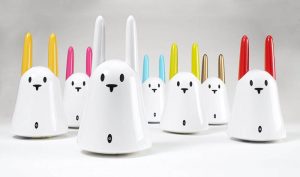
A Wi-Fi rabbit that was ahead of its time
The Nabaztag was a small, white, Wi-Fi-connected rabbit. It read you the weather, reported stock prices and wiggled its ears to signal notifications. In 2005, it was an unprecedented consumer ambient device, arriving nine years before Amazon Echo.
Manufactured by French company Violet, the Nabaztag demonstrated that connected devices could sit naturally in a domestic environment without looking like technology. It was discontinued in 2015 when its servers could no longer be maintained, an unfortunately common problem in IoT, and one we strive to avoid in our IoT development work at DO OK.
#6. The Fitbit (2009)
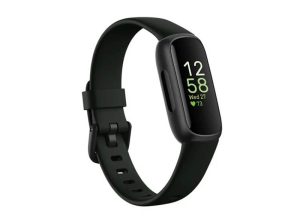
When wearables went mainstream
The concept of IoT wearables predates Fitbit by decades; Steve Mann was building wearable cameras in the early 1990s. But Fitbit, launched in 2009, turned the wearable into a mass-market product category.
Fitbit made personal health data legible and actionable for ordinary consumers by attaching a sensor to your wrist and connecting it to your phone. By 2018, the field had grown large enough to earn its own acronym: the Internet of Medical Things, or IoMT, now a market projected to be worth hundreds of billions globally.
#7. The Nest Learning Thermostat (2010)
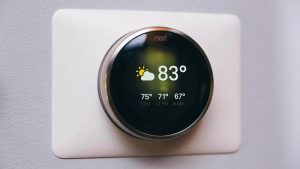
The gadget that made smart homes real
The Nest Learning Thermostat wasn’t the first connected thermostat, it was just the first one people actually wanted. Its predecessors were functional and forgettable, but Nest was designed as a consumer product first and home infrastructure second.
More importantly, it learned. Nest built a personalised heating schedule automatically using occupancy sensors and usage patterns, the first time machine learning had been applied to a mainstream household IoT device. It demonstrated something the industry had struggled to articulate: the value of IoT isn’t just connectivity, it’s intelligence.
Google acquired Nest for $3.2 billion in 2014, but the acquisition provided an early lesson in IoT platform risk. As Google absorbed Nest, older devices were deprecated and integrations discontinued, leaving users with hardware that worked, but not in the ways they’d originally paid for. It’s a dynamic the industry still hasn’t fully resolved, that is, connected devices are only as durable as the platforms that support them.
#8. Amazon Echo (2014)
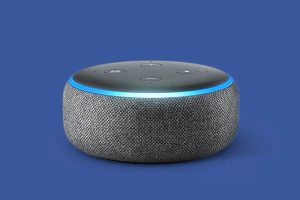
Voice control enters the living room
The Amazon Echo proved that ambient computing (a device that sits in your environment and responds when spoken to) was something people would actually use. It made IoT a household concept, and demonstrated the commercial potential of a connected product that lives in the home and listens.
Within a few years, smart speakers were in tens of millions of homes worldwide. The Echo also prompted an industry-wide conversation about privacy and security that’s still very much ongoing, another legacy of this device.
#9. John Deere's Connected Tractors (2010s)

Industrial IoT gets complicated
John Deere’s connected tractor is one of the most significant industrial IoT examples of the past two decades, as well as one of the most controversial. Embedding GPS, telematics and remote diagnostics into agricultural machinery enabled farmers to monitor equipment and reduce downtime. The technology genuinely works.
But the proprietary software attached to it sparked a global Right to Repair movement. Mechanical faults that should have cost an hour’s work now required authorised technicians with licensed diagnostic software, sometimes located days away from rural areas. The lesson was that connectivity creates dependencies, and who controls connected hardware matters as much as what the hardware can do.
#10. Barcelona's Smart City Network (2012-present)
What IoT looks like at scale
Barcelona’s smart city programme is one of the most-cited examples of internet of things for smart cities infrastructure in practice. A network of sensors across streets, parks and utilities enabled real-time monitoring of parking, mass transit, waste levels and public irrigation, with the latter reportedly saving around 25% of water usage in deployed areas.
The Barcelona model showed that IoT’s most powerful applications are in networked systems, where data from thousands of sensors, aggregated and acted upon in real time, can meaningfully impact how infrastructure is managed. It remains a global reference point for urban IoT deployments.
Honourable Mention: The Smart Egg Tray

A cautionary tale in connected devices
The smart egg tray, which monitors how many eggs you have and sends a notification when supplies run low, became shorthand for everything that can go wrong with IoT product thinking.
It requires Wi-Fi setup, an app and ongoing cloud infrastructure. Checking your eggs “manually” also costs next to nothing, is trivially easy to check by opening the fridge, and its failure mode is a slightly disappointing omelette. The smart egg tray represents an entire category of thinking, and the belief that connectivity is inherently valuable, regardless of whether the problem justifies the complexity.
The best IoT examples on this list worked because they addressed real friction, at scale, in a way that only connectivity made possible.
What 40 Years of Connected Devices Actually Teaches Us
The history of IoT is the same impulse recurring across four decades: to make information available where it wasn’t before, and to act on it automatically.
The devices that changed whole paradigms succeeded because they solved real problems at scale, with the right level of complexity for their context. The ones that didn’t usually fell down somewhere in that chain.
Connected devices are infrastructure now, for better or worse. The question we should be asking now isn’t “can we connect this?” but “should we, and what happens when we do?” Those are engineering questions, product questions and business questions. And they’re what separates the IoT examples in our Hall of Fame from the cautionary tales.
Are you building connected products or integrating IoT into your infrastructure? Get in touch with DO OK to find out how we can help with development and implementation.